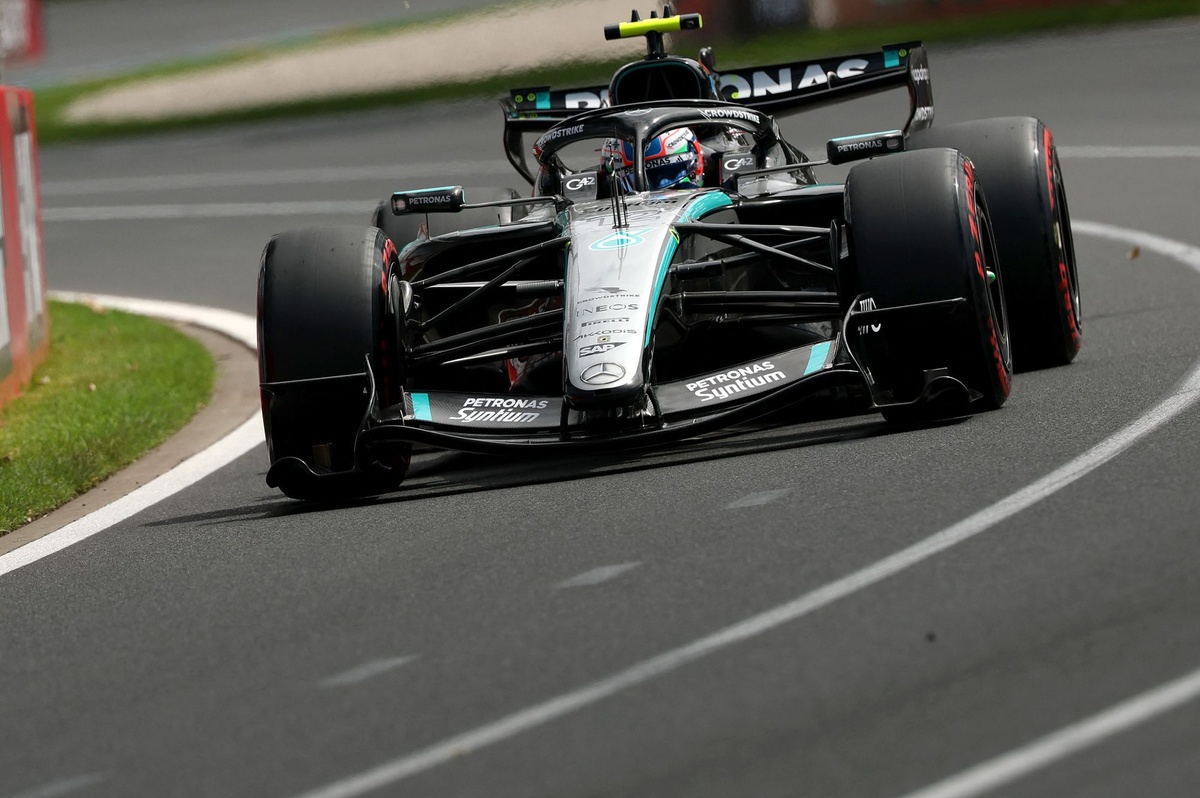
Mercedes Fined €7,500 for Dangerous Q3 Antonelli Release in Australian GP
The high-octane world of Formula 1 is a relentless pursuit of perfection, where fractions of a second and minute details can mean the difference between victory and defeat. However, sometimes even the most meticulously organized teams make critical errors. Such was the case for the Mercedes-AMG Petronas Formula One Team at the recent Australian Grand Prix, where a dangerous pitlane release involving young driver Kimi Antonelli during Q3 led to a significant fine of €7,500 from the FIA stewards. This incident not only caused a red flag disruption but also highlighted the immense pressure and rapid decision-making inherent in elite motorsport.
The penalty, which saw **F1 Mercedes multada** (F1 Mercedes fined) for a procedural oversight, underscored the stringent safety regulations governing pitlane operations. While a monetary penalty might seem minor in the grand scheme of F1 budgets, the underlying safety implications and the disruption caused to a crucial qualifying session are far more significant. This article delves into the specifics of the incident, the team's explanation, and the broader lessons for F1 safety protocols.
The Incident Unfolds: A Dangerous Release in Q3
Kimi Antonelli's weekend in Melbourne was anything but straightforward. The young talent, stepping in for an injured driver, faced immense pressure, and his journey through the Australian GP qualifying sessions was a testament to both his resilience and the capabilities of his team. In the final minutes of Free Practice 3, Antonelli suffered a heavy crash, severely damaging his W17 car and casting doubt on his participation in qualifying. Mercedes' mechanics, however, performed a heroic feat, working tirelessly to get his car ready for the qualifying session on time. Not only did they succeed, but Antonelli impressively advanced to Q3, setting the stage for a strong performance, ultimately securing a front-row start alongside teammate George Russell.
Yet, Antonelli's Q3 session was marred by an unexpected and potentially dangerous mishap. As he was released from the pits, his Mercedes W17 still had a cooling duct fan assembly attached to its right side. This crucial piece of equipment, typically removed before a car exits the garage, became dislodged as Antonelli navigated Turn 1. The fan assembly broke into pieces, scattering debris across the track. To make matters worse, Lando Norris, driving his McLaren, passed over the debris, damaging his front wing and further dispersing fragments. This hazardous situation forced race control to issue a red flag, halting the session to allow marshals to clear the track.
The stewards swiftly investigated the incident. Their findings confirmed that "car #12 (Antonelli) left the pits during the session with the cooling duct fan still attached to the right-hand side. The fan assembly detached from car 12's duct at Turn 1, broke up, and a part of it ricocheted off the gravel trap at the exit of the corner." They further elaborated that "another part of the fan assembly detached on track at Turn 2 and was run over by the front wing and tire of another car, spreading debris across the track, damaging the other car's front wing, and necessitating the interruption of the session with a red flag for debris removal." For this serious lapse, the **F1 Mercedes multada** penalty was set at €7,500.
Unpacking Mercedes' Explanation: A Hectic Pitlane and Human Error
In their submission to the stewards, Mercedes offered a candid explanation for the oversight, shedding light on the immense pressure cooker environment of an F1 pitlane. The team revealed that the extensive damage incurred by Antonelli's car during his FP3 crash had necessitated a significant alteration to their standard repair protocols. The need to get the W17 back on track within an extremely tight timeframe meant that the usual division of tasks among mechanics had to be adjusted.
Normally, a dedicated team member is responsible for installing and removing each cooling fan. However, due to the urgent and complex repairs stemming from Antonelli's earlier incident, the mechanic typically assigned to the right-side cooling fan was occupied with another critical task. In the scramble to prepare the car, the essential step of removing this particular fan before releasing the car from the pit box was simply "forgotten."
The team emphasized that neither they nor the driver realized the fan was still attached until the incident was reported by race control. This highlights a crucial aspect of human factors in high-pressure environments: even with robust procedures, exceptional circumstances can lead to momentary lapses. The incident serves as a stark reminder that while F1 engineering is at the forefront of technology, the human element remains integral, and human error, though rare, can have significant consequences. Mercedes acknowledged their mistake and accepted the penalty, recognizing the importance of upholding pitlane safety standards. You can read more about the specifics of the mistake and the red flag that followed here:
Inside Mercedes' Costly F1 Error: Antonelli's Q3 Cooling Duct Mishap.
Beyond the Fine: The Implications for F1 Safety and Team Protocols
While the €7,500 fine levied against Mercedes might seem modest, the broader implications for F1 safety and team protocols are considerable. A loose component on track, especially at F1 speeds, poses a significant danger. Debris can cause tire punctures, damage critical aerodynamic components, or, in the worst-case scenario, strike another car or even a marshal. The fact that Lando Norris’s car suffered damage underscores the real-world impact of such an oversight.
F1 teams operate under incredibly tight schedules, especially during qualifying sessions where every millisecond counts. However, safety must always remain paramount. This incident will undoubtedly prompt a review of pitlane procedures not just at Mercedes but potentially across the entire grid. Teams constantly strive to optimize pit stop efficiency, but this case demonstrates that rushing, even under extreme pressure, can lead to dangerous oversights.
Future preventative measures might include:
- Enhanced Checklists and Verification: Reinforcing multi-person checks for critical items before car release.
- Technological Solutions: Exploring sensor-based systems that could alert teams to unremoved components.
- Revised Training Protocols: Emphasizing vigilance and communication during emergency repairs or high-pressure situations.
- Strict Adherence to Standard Operating Procedures (SOPs): Ensuring that even under duress, core safety checks are never bypassed.
This incident serves as a powerful reminder that even the best-resourced and most professional teams can fall prey to human error. The FIA’s swift action with the **F1 Mercedes multada** penalty reaffirms their commitment to maintaining the highest safety standards in the sport.
A Season of Challenges and Lessons Learned for Mercedes
The 2026 season (as per the source context date) has been one of significant introspection and challenge for Mercedes. While this specific incident is unrelated to their on-track performance, it adds another layer to their ongoing efforts to fine-tune operations and maximize every opportunity. The team has been working tirelessly to improve their car's performance and close the gap to their rivals. Errors like the one in Australia, even if procedural, highlight the constant need for vigilance and flawless execution in all aspects of F1 racing.
Every incident in Formula 1, whether it's a car setup issue, a driver error, or a pitlane oversight, provides valuable data and learning opportunities. Mercedes, known for its meticulous engineering and relentless pursuit of excellence, will undoubtedly conduct a thorough internal review to understand how this error occurred and implement measures to prevent its recurrence. This commitment to continuous improvement is what defines top-tier F1 teams. The penalty received by Mercedes in Australia for the dangerous release of Antonelli's car, following extensive repairs, is a clear example of the consequences of such lapses. For more details on the context of this penalty, refer to:
Mercedes Penalty in Australia: Dangerous Release & Red Flag After Repairs.
Conclusion
The €7,500 fine imposed on Mercedes for the dangerous release of Kimi Antonelli's car in Q3 of the Australian Grand Prix serves as a crucial reminder that in the high-stakes environment of Formula 1, even minor oversights can lead to significant safety hazards and procedural penalties. While the team's explanation of human error under pressure due to urgent repairs is understandable, it underscores the need for unbreakable safety protocols. This incident will undoubtedly prompt Mercedes, and potentially other teams, to re-evaluate and reinforce their pitlane procedures, ensuring that the pursuit of speed never compromises the paramount importance of safety. The FIA's firm stance with the **F1 Mercedes multada** decision reinforces the consistent application of rules designed to protect drivers, teams, and marshals alike, ensuring that the spectacle of F1 remains as safe as it is thrilling.